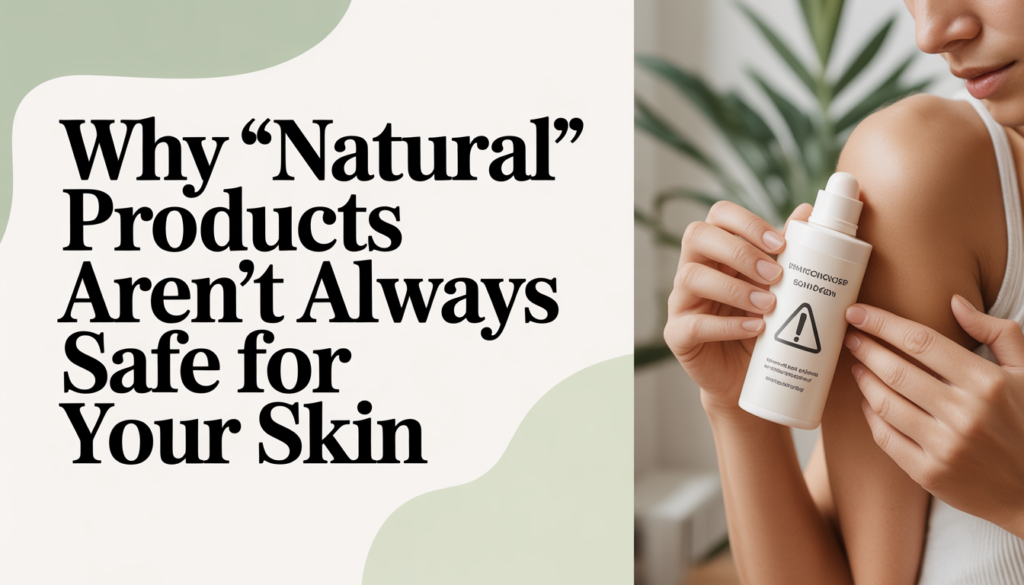
Walk into any beauty store in India and you’ll see familiar words everywhere — Natural, Herbal, Chemical-free, Ayurvedic, Clean. It feels safe and nostalgic. But “natural” is a marketing word. “Safe” is a scientific conclusion.
What Does “Natural” Actually Mean in Skincare?
In India, there is no strict legal definition that standardises the word “natural” in cosmetics. This allows wide interpretation, emotional marketing, and assumptions that may not be accurate.
- Natural ingredients can coexist with synthetic stabilisers
- Percentages are rarely disclosed clearly
- The term itself is loosely regulated
Natural Ingredients Are Still Chemicals
Everything applied to skin is made of chemical compounds. Water is a chemical. Aloe vera contains active molecules. “Chemical-free” is scientifically meaningless.
Natural Ingredients Can Still Cause Irritation
Common natural irritants include essential oils, citrus extracts, raw turmeric, and undiluted vinegar. Indian skin is especially prone to pigmentation after irritation.
Natural vs Synthetic: A Practical Comparison
| Factor | Natural | Synthetic |
|---|---|---|
| Stability | Lower | Higher |
| Allergy Risk | Higher in plant extracts | Lower when formulated well |
| Testing | Varies by brand | More consistent |
| Marketing Perception | “Safe” | “Harsh” |
The “No Preservative” Myth
Preservatives prevent bacterial and fungal contamination. In India’s climate, lack of proper preservation poses real risk. Regulated preservatives are safer than spoiled skincare.
Why This Matters for Indian Skin
Indian skin (Fitzpatrick IV–V) is more prone to pigmentation. Even mild irritation can lead to long-lasting dark marks. Prevention matters more than treatment.
How to Choose Products Intelligently
- Is it dermatologically tested?
- Are active concentrations disclosed?
- Is the ingredient list transparent?
- Is the product stable and preserved?
Natural does not mean harmless. Synthetic does not mean dangerous. Safety depends on formulation quality, concentration, testing, and skin compatibility — not green labels.
💬 Customer Reviews
- 92% readers felt more confident choosing skincare products
- Most valued insight: irritation causes more damage than “chemicals”
- Highly relevant for Indian skin concerns
I used to avoid anything “chemical”. This article helped me understand why my skin kept reacting to essential oils.
Clear, science-aligned explanation. Important reading in a market flooded with fear-based skincare marketing.
I wish I had read this before trying DIY remedies. Very practical and reassuring.