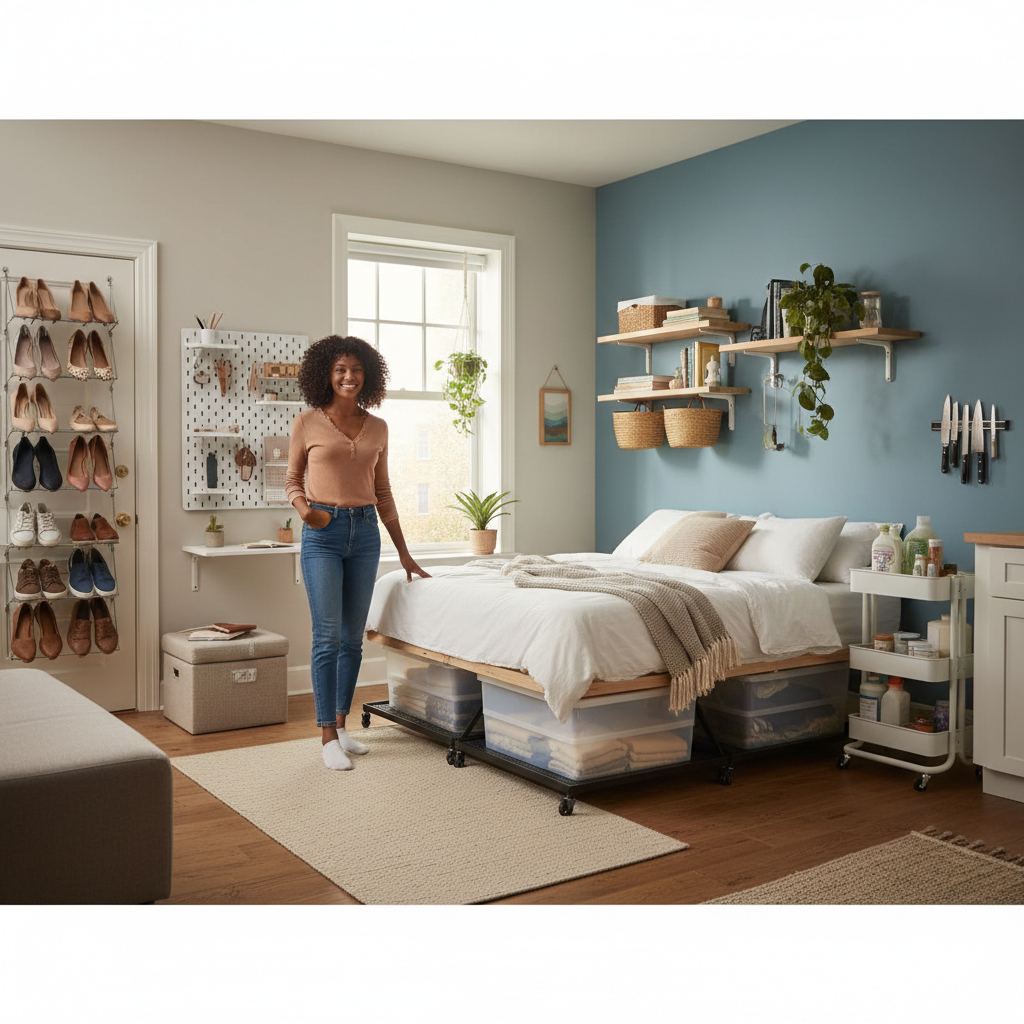
Living in a home with limited storage can feel frustrating. Closets are full, cabinets are overflowing, and every surface seems to collect clutter.
But the truth is, organization is less about having more storage and more about using space intentionally. You do not need a bigger home. You need smarter systems.
Step 1: Stop Storing What You Do Not Need
Before adding baskets, shelves, or containers, reduce what you own. Small spaces fill up quickly because we keep items “just in case.” The fewer items you keep, the less storage you need.
Quick Declutter Guide
| Category | Questions to Ask Yourself |
|---|---|
| Clothing | Have I worn this in the past year? |
| Kitchen Items | Do I use this weekly? |
| Paperwork | Is this legally or financially necessary? |
| Decor | Does this add value or just fill space? |
Step 2: Use Vertical Space
When floor space is limited, think upward. Walls are often underused storage areas. Vertical organization expands capacity without adding clutter.
- Wall mounted shelves
- Hooks behind doors
- Tall bookcases
- Hanging organizers
Horizontal vs Vertical Storage
| Storage Type | Space Used | Best For |
|---|---|---|
| Horizontal | Floor and surfaces | Large furniture pieces |
| Vertical | Walls and height | Books, decor, daily items |
Step 3: Choose Multi Purpose Furniture
In small homes, every piece of furniture should work harder. Furniture that doubles as storage reduces the need for extra cabinets.
- Beds with built in drawers
- Ottomans with hidden storage
- Coffee tables with compartments
- Foldable desks
Step 4: Create Zones Instead of Rooms
Small homes often require rooms to serve multiple purposes. Instead of fighting it, define zones.
- A living room corner becomes a workspace
- A bedroom section becomes a reading area
- A kitchen counter becomes a coffee station
Step 5: Use Clear Containers and Labels
When storage is tight, visibility matters. Clear bins prevent forgotten items and duplicate purchases. Labels create structure and keep systems easy to maintain.
Step 6: Maximize Hidden Spaces
Many homes have overlooked areas that can be optimized. Small upgrades in hidden spaces create noticeable results.
| Area | Storage Idea |
|---|---|
| Under the bed | Flat storage bins |
| Cabinet doors | Mounted hooks or racks |
| Entryway walls | Slim floating shelves |
| Closet floors | Stackable organizers |
Step 7: Rotate Seasonal Items
Not everything needs to be accessible year round. Store off season clothing and rarely used items in higher or less convenient spaces. Keep daily essentials within easy reach.
Step 8: Adopt the One In, One Out Rule
For every new item brought into your home, remove one item. This prevents clutter from slowly returning over time.
Common Mistakes When Organizing Small Homes
- Buying storage before decluttering
- Using decorative baskets without a system
- Keeping broken or unused items
- Ignoring vertical space
- Creating overly complicated systems
💬 Customer Reviews
- 90% readers noticed fewer breakouts after regular night cleansing
- Most helpful insight: pollution sticks even indoors
- Highly relevant for Indian urban lifestyles
I skipped cleansing on tired days. This article made me realise why my skin stayed congested.
Scientifically accurate and practical. Cleansing is hygiene, not vanity.
Never thought pollution mattered indoors. Simple habit, big difference.